Understand first. Then intervene.

The method brings five activities into three clear moments: understand the work and priorities, build and verify the solution, then provide the agreed support.

Understand · Build · Support

Five activities organised into three clear moments.

Three moments, with clear reviews.

Discovery and analysis help us understand; design, development and testing build the solution; agreed maintenance and improvements provide support.

  1. Phase 01

    Context

    Discovery and requirements

    Before proposing anything, I understand the business, the people using the system and the practical problems to solve.
  2. Phase 02

    Diagnosis

    Technical and strategic analysis

    I examine the existing system, identify bottlenecks and assess the options from both a technical and commercial perspective.
  3. Phase 03

    Design

    Solution design

    I define what to build, how data should move and which tools to use before development begins.
  4. Phase 04

    Delivery

    Development, testing and training

    I build, test on real devices and train the team to manage the system confidently in practice.
  5. Phase 05

    Continuity

    Maintenance and continuous improvement

    I provide the agreed support and improvements, with requests organised through tickets.
The method starts before development

Project onboarding is a process too.

Once the objective is clear, Start collects company details, the requested service and the information needed for that specific project through a guided path.
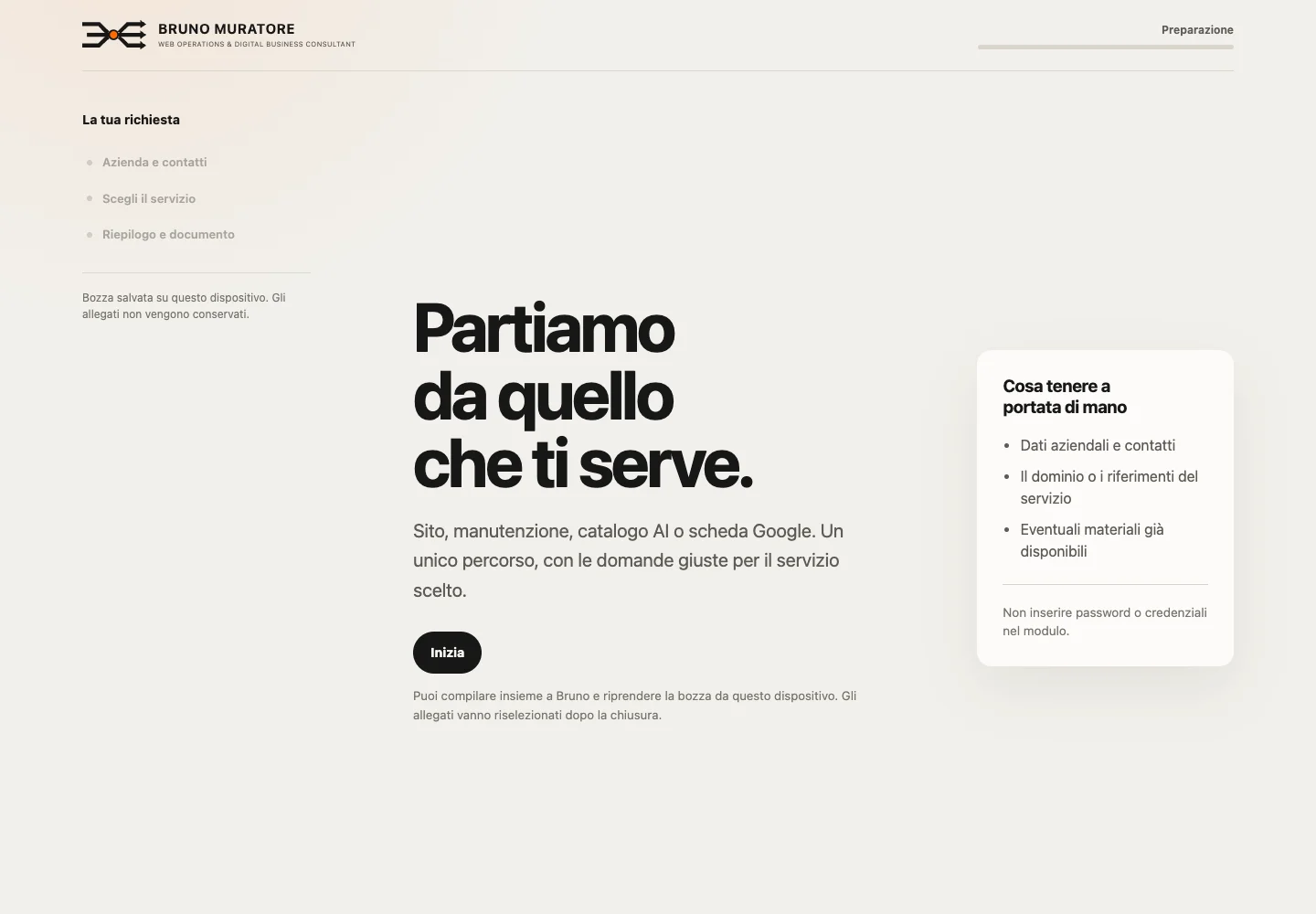
  • Company and contacts
  • Service and pricing
  • Only relevant questions
  • Project summary
The portal is currently in Italian.
Start welcome screen: preparing a request and the project steps
Start: the portal for preparing your project request.

What stays under control.

The method keeps decisions visible before, during and after delivery.

Input

Before the intervention

The problem is considered together with the work behind it: people, tools, data and priorities.

  • Business context
  • People
  • Data
  • Priorities
Decision

During the project

Goals, activities and technical choices remain explicit. Reviews prevent work from being built on assumptions that were never agreed.

  • Goals
  • Activities
  • Testing
  • Reviews
Continuity

After delivery

Training and agreed support keep the system manageable. Requests are tracked instead of returning as isolated emergencies.

  • Training
  • Monitoring
  • Tickets
  • Improvement

Start with the real context.

Tell me what is slowing the work down. The first conversation establishes whether, where and how an intervention makes sense.

The first call is free, with no obligation.